Roof soft washing in Sandy Springs targets the dark algae streaks and moss that Georgia's humidity practically guarantees on asphalt shingles over time. We use low pressure (150–300 PSI) with a cleaning solution instead of a pressure washer, which is the method most shingle manufacturers actually require to keep your roofing warranty intact.
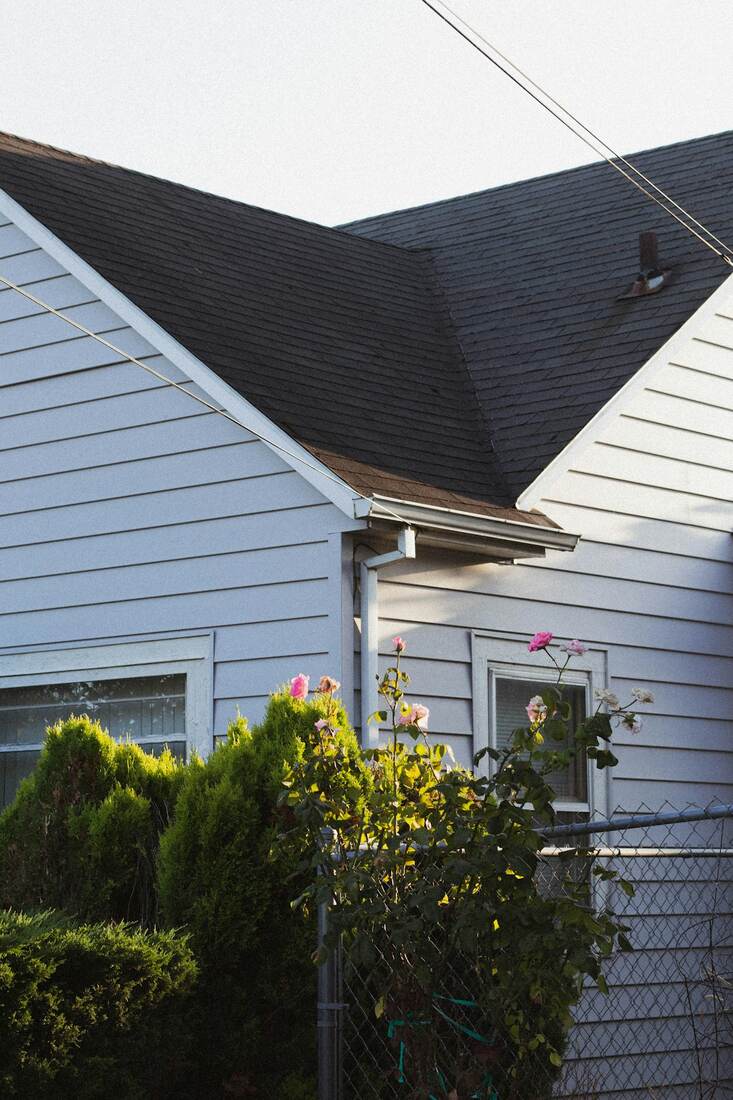
We apply a cleaning solution formulated to kill algae, moss, and lichen at low pressure, then let it sit for 10 to 15 minutes so it can work through the growth rather than just rinsing the surface. The solution breaks down the organic material at the root, which is why soft washed roofs stay cleaner longer than a quick pressure rinse.
After the dwell time, we rinse the roof at low pressure, working from the ridge down so runoff doesn't leave streaking. We also rinse gutters and any siding the runoff touches on the way down.
The bacteria behind those dark streaks, Gloeocapsa magma, thrives in warm, humid climates like Sandy Springs sees for most of the year. It feeds on the limestone filler used in asphalt shingles, and once it takes hold, it spreads via spores carried by wind and rain to neighboring roofs.
Shaded roof sections, especially those under tree cover or facing north, stay damp longer after rain and give the bacteria more time to establish itself. That's why streaking usually shows up unevenly across a roof instead of across the whole surface at once.
Most roof soft washing jobs run $300 to $800. Factors that move the price within that range:
Soft washing, without exception, for asphalt shingle roofs. Full-pressure washing strips the protective granules right off the shingle surface, which shortens the roof's lifespan and can void the manufacturer's warranty outright. It might look dramatically clean right after, but it trades short-term appearance for long-term damage.
Pressure washing stays reserved for hard, non-granulated surfaces like concrete driveways or composite decking, where the material can actually take that level of force without breaking down.
No, the opposite is usually true. Most asphalt shingle manufacturers specifically require soft washing (low pressure plus a cleaning solution) for warranty-safe cleaning. Full-pressure washing a roof is what actually risks voiding a warranty, since it can strip granules and damage the shingle surface.
That's almost always a bacteria called Gloeocapsa magma, not dirt or soot. It feeds on the limestone filler in asphalt shingles and spreads across the roof over time, which is why it shows up as streaks running down from the ridge rather than random spots.
Most residential roofs take 1 to 2 hours, including the 10 to 15 minute dwell time the cleaning solution needs to work through the algae and moss before rinsing.