Driveway cleaning in Sandy Springs deals with a stain problem most other regions don't have as badly: red clay runoff. Combine that with oil drips, tire marks, and algae in shaded spots, and most driveways here need a real pressure wash, not just a hose-down. We run 1,300–3,100 PSI depending on how set-in the staining is, and give you a firm price before we start.
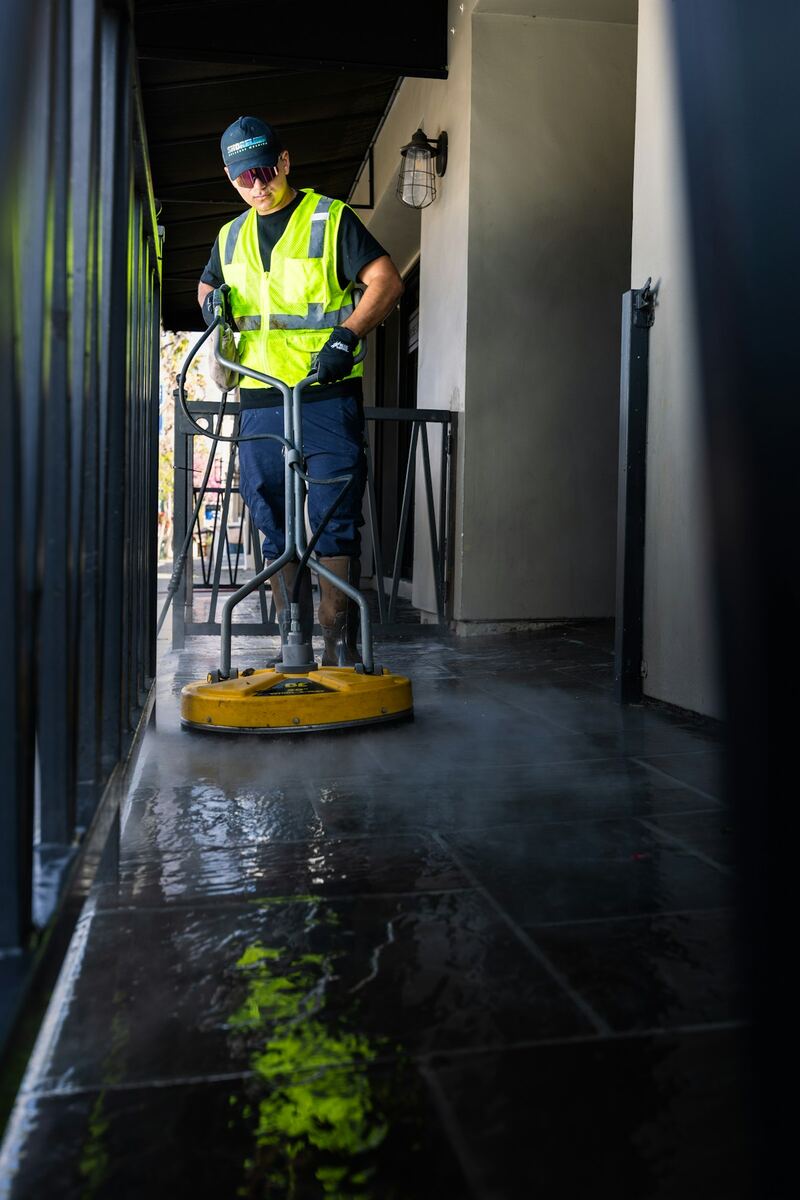
We pre-treat visible oil, grease, or rust stains with a degreasing solution, since plain water alone won't break those down. After a short dwell time, we run the surface at full pressure using a rotating surface cleaner attachment, which cleans evenly and avoids the streaky lines you get from a standard wand nozzle.
We finish with a full rinse and a walkthrough with you, pointing out any spots that need a second treatment. Most jobs are one visit, but deeply set stains sometimes need a follow-up pass.
Sandy Springs sits on the kind of clay-heavy soil common across the Piedmont region of Georgia, and when it rains, that red clay washes onto driveways, walkways, and patios from surrounding beds or slopes. Once it dries into the concrete's pores, it doesn't rinse out with a garden hose.
Sun exposure and water runoff both affect how fast new staining builds up. Shaded sections of a driveway near trees stay damp longer and grow algae faster, while sun-exposed sections bake in dust and pollen that eventually turns into a stubborn film if it's never washed off.
Most driveways run $160 to $690, and where yours lands depends on:
A single pass handles most driveways — general dirt, pollen film, light algae, and recent stains all lift in one visit. Deep-set oil stains, red clay that's been baked in over multiple seasons, or concrete that hasn't been cleaned in several years often need a second pass with a stronger degreasing solution.
We'll tell you during the walkthrough if your driveway looks like a one-pass or two-pass job, so the price you're quoted is the price you pay, not a number that changes once we're partway through.
Hot water pressure washing removes about 75 to 90 percent of most oil stains, depending on how long the stain has been sitting and whether it's motor oil or grease. Fresh stains come out almost completely; stains that have soaked into the concrete for years may leave a faint shadow even after cleaning.
Standard concrete driveways handle full-pressure washing fine. The risk comes from older, already-cracked or spalling concrete, where high pressure can widen existing damage. We'll flag that during the walkthrough before starting, and adjust pressure or recommend a gentler approach if needed.
Once a year is typical for most Sandy Springs driveways, though homes near trees that drop sap or pollen heavily sometimes need a cleaning every 6 to 8 months to stay ahead of staining before it sets in.
Sealing isn't required, but it does help prevent red clay and oil stains from soaking back into the concrete as quickly. We can point you toward that option after cleaning if you want to extend the time between washes.