Pressure Matched to the Material

Deck & Patio Cleaning in Sandy Springs, GA

A deck is the one surface on your property where using too much pressure does visible, permanent damage. Wood fuzzes. Composite dulls. Paver joints blow out. We set pressure by material before the first pass, not after, and we tell you up front whether a wash will actually fix what you are looking at.

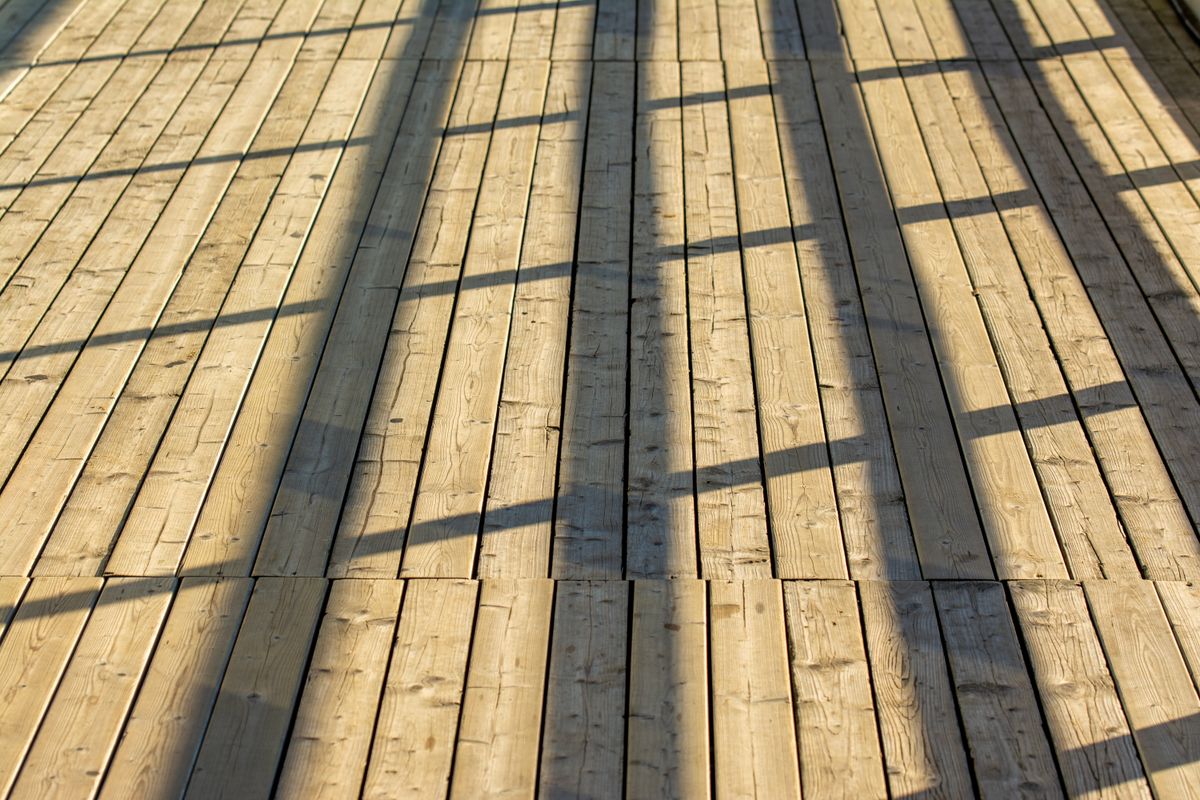
Clean wood deck after pressure washing in Sandy Springs, GA

Wood, Composite, and Pavers Are Three Different Jobs

People tend to say "deck cleaning" like it is one service. In practice the material dictates the equipment, the chemistry, and how close the tip gets to the surface, and getting that wrong is how homeowners end up with a deck that looks worse after cleaning than before.

Pressure-treated pine and cedar are soft. Above roughly 1,200 PSI, or with a narrow tip held too close, the wand tears out the soft spring growth between the harder grain lines and leaves a raised, hairy texture that shows through any stain you put on afterward. We stay in the 800 to 1,200 PSI range with a 40-degree fan tip, keep the wand moving with the grain, and let a wood-safe cleaner sit long enough to break down mildew before we rinse.

Composite decking is more forgiving on force but less forgiving on chemistry. The mold that grows on composite lives in the embossed grain pattern, which holds moisture better than smooth boards do. Straight bleach can lighten the color pigment unevenly, so we use a sodium-percarbonate-based cleaner and a moderate rinse instead of trying to blast the growth out mechanically.

Pavers, flagstone, and brick patios take real pressure without complaint. The catch is the sand in the joints. A surface cleaner run over pavers at full strength will pull that jointing sand up in a few passes and leave the stones loose enough to rock underfoot. We keep the pressure controlled around the joints and tell you afterward if the patio needs re-sanding, which is a separate step most companies never mention.
The Test That Tells You Whether Cleaning Is Enough

Before you pay anyone to wash a wood deck, spend five minutes on it yourself. Take a screwdriver and press the tip firmly into the boards in the spots most likely to hold water: where the deck meets the house, around post bases, under the grill, and along any board that stays shaded all afternoon.

If the tip stops after a couple of millimeters, the wood is sound and cleaning is the right call. If it sinks in easily or the wood feels spongy, that is rot, and no amount of washing reverses it. Pressure applied to a rotted board will just open it up further.

The same logic applies to the structure you cannot see. Ledger boards, joists, and post bases fail long before the walking surface looks bad, especially in this climate where wood stays damp under a canopy. We will point out anything that looks structurally questionable during the walkthrough. We are not carpenters and we will not pretend to be, but we would rather tell you the deck needs a repair than take money to make a failing deck look briefly nicer.

Why Half Your Deck Looks Worse Than the Other Half

Almost every deck we clean in Sandy Springs has a good side and a bad side, and the line between them is usually shade.

The mature hardwood canopy that makes neighborhoods here pleasant to live in also keeps the north and east faces of a deck damp for most of the day. Mildew and algae need moisture and time, and shaded boards give them both. Meanwhile, the sun-exposed section dries within an hour of a rain and stays comparatively clean, which is why the two halves can look like they belong to different houses.

Tree cover contributes in a second way. Oak is the dominant pollen producer in the metro area, and counts climb from late March through mid-April before tapering off toward the end of May. That yellow film settles on horizontal surfaces, mixes with morning dew, and becomes a sticky base layer that traps dirt and feeds growth. Add fall leaf drop, where wet leaves left sitting on boards leach tannins and leave dark rectangular ghosts, and a deck under trees picks up two heavy deposits a year that an open deck never gets.

None of that is a reason to cut the trees down. It is a reason to expect the shaded side to need attention more often, and to schedule cleanings around those two deposit seasons rather than at random.

If You Are Staining or Sealing Afterward

Cleaning is step one of a two-step job for a lot of homeowners, and the order and the timing both matter more than the products do.

What Deck and Patio Cleaning Costs in Sandy Springs

Nationally, deck washing runs roughly $100 to $250 for a typical residential deck, with most homeowners landing near $150 and larger or heavily soiled decks going past $400. Contractors commonly price a base fee covering the first 300 square feet and then add about $0.30 to $0.40 per square foot beyond that. Our pricing sits in that range, and the variables that move it are:

You get a firm number before we start. If we get into the job and find the deck needs a second pass, we tell you and you decide, rather than finding a larger figure on the invoice.

Frequently Asked Questions

Can you pressure wash a wood deck without damaging it?

Yes, but not at the pressure we'd use on a driveway. Softwoods like pine and cedar start fuzzing and splintering somewhere around 800 to 1,200 PSI, so we work in that lower band with a wide fan tip held back from the boards and let the cleaning solution do most of the lifting. Composite and paver surfaces tolerate more force, and we adjust up accordingly.

How long does a deck need to dry before staining or sealing?

Plan on two to three dry days in Sandy Springs, and closer to four if the deck sits under heavy tree cover. Wood that still holds moisture below the surface will trap it under the new finish, and that is the usual reason a stain job peels within a season. A cheap moisture meter reading under 15 percent is the reliable green light.

Will cleaning make my gray, weathered deck look new again?

It will take off the gray surface layer and bring back a lot of the original tone, because that silvering is oxidized wood fiber sitting on top rather than a change in the wood itself. What cleaning cannot fix is UV fading in the boards underneath, deep cracks, or nail heads that have backed out. Those need stain or board replacement.

Do you clean pavers and stone patios too?

We do. Pavers get the same wash but a different finish step, because high pressure pulls the joint sand out from between the stones. We flag any joints that need re-sanding after the deck or patio dries so you are not left with loose pavers a month later.

Ready to Get Your Deck Back?

Tell us the material and rough size and we will give you a firm price, usually the same day.

Call (770) 651-7707